


Page 25 - DT 13-1 March 2023
P. 25
20-26-André Gaul-Q8_6-7-8-Ivoclar.qxd  3/27/2023  2:01 PM  Page 4


                                                                                        prosthetic section 25
              DENTAL TECHNOLOGY, JANUARY-MARCH 2023


                We proceeded to print a set of tryins in KeyDenture Base resin at 100µm layer thickness.  be noted that, at the earlier stage of the
              Normally, 3D printed try-ins would be printed in a tooth shaded material of the same brand and  process,  the  stone  models  had  been
              chemistry as the pink denture base, to which a pink composite could be applied to simulate gin-  scanned “as-is”, without first blocking out
              giva, but Keystone did not have this available at the time. In any case, our primary concern at  any of the vestibular undercut below the
              this stage was not so much the esthetics but rather the adaptation, function and correct posi-  residual ridge. This resulted in the denture
              tion of the teeth. The patient was fully aware that these were not the final dentures.  flanges, filling in those undercuts.
                We were soon astonished at how well these dentures fit. The patient was equally quick to  In  order  to  be  able  to  properly  fit  the
              comment on how comfortable and light they felt. Some design modifications were nonetheless  denture  bases  over  the  printed  models,
              needed, namely the position of the medial line and the height of the occlusal plane. We there-  some of the undercut, particularly on the
              fore returned to Dentca Design and applied these minor adjustments. In retrospect, both Mr. Lin  upper  model,  had  to  be  burred  down
              and I agreed that, had we been a bit more diligent in taking initial patient measurements, we  slightly (The same would have applied to
              could easily have avoided the need for these adjustments. Fortunately, making adjustments in  the stone models). In addition, the posteri-
              Dentca Design is simple and a second and final set of denture files were generated in no time.  or limits of the denture flanges themselves
              This time, the prosthetic bases and teeth were printed separately and in their respective resin.  would later have to be reduced slightly, as
              While the bases were printed at 100µm, the tooth segments were printed at 50µm. Each print-  is later explained, for patient comfort.
              ed parts were thoroughly cleansed of any uncured resin and then dried.                  The  teeth  were  then  installed  in  the
                The printed parts were then post-cured according to the resin manufacturer’s recommenda-  bases,  starting  with  the  posterior  seg-
              tions. This is critical for several reasons: To achieve the final dimension of the parts, reach the  ments,  and  bonded  in  place,  using  the
              material’s optimal physical properties and to ensure the elimination of any residual monomer.  same KeyDenture Base resin (Figures 14
              After post curing, the support stubs were burred off of the parts (Figure 25). The teeth and  and 15). To maximise the bond, the roots
              denture bases were then ready for assembly. It could be argued that a 3D printed denture work-  of the teeth were lightly roughened with a
              flow eliminates the need to assess the occlusion and adaptation on a conventional articulator,  bur.
              since the contraction  of dental acrylic and dimensional changes associated with it is no longer  To  cure  the  resin,  an  LED  wand  was
              a variable, but 3D printed parts are subject to some dimensional changes and occlusal contact  used, but this is merely to fix the teeth in
              points can require some adjustments, in particular, during mandibular movements. Since this  place (Figure 16). A final post-curing of
              was our first attempt at 3D printed dentures, we preferred to weigh on the side of caution and  the  assembled  dentures  was  done  in  an
              so, went ahead with designing and printing special models with registration pins. Alternatively,  LED curing unit to permanently bond the
              the stone models could themselves have been mounted on an articulator and used in lieu of 3D  teeth and to cure the layer of resin applied
              printed models.                                                                      to the surface of the bases. (Figure 19).
                The alignment and occlusion of our printed models was validated with our patient’s wax rims  The  dentures  were  then  returned  to  the
              (Figure 13). The alignment and vertical dimension provided by the registration pins were spot  models  and  the  occlusal  contact  points
              on and no adjustments were necessary. The printed denture bases were then mounted. It should  were verified (Figure 20). Since we had
                                                                                                   already  tested  the  tryins  in  the  patient’s
                                                                                                   mouth, it was no surprise at this stage that
                                                                                                   the  contact  points  required  little  alter-
                                                                                                   ations.
                                                                                                      Final  adjustments  during  lateral  and
                                                                                                   protrusive  movements  would  be  per-
                                                                                                   formed in-mouth.
                                                                                                      A  preliminary  polishing  on  the  lathe
                                                                                                   was  done,  using  pumice  and  compound
                                                                                                   (Figure  20).  The  dentures  were  then
                                                                                                   ready  for  final  fitting  in-mouth  (Figure
                                                                                                   22). A slight reduction of the labial flange
                                                                                                   on  both  the  upper  and  lower  dentures
                                                                                                   were required for patient comfort and ease
                                                                                                   of  insertion.  A  final  polishing  was  per-
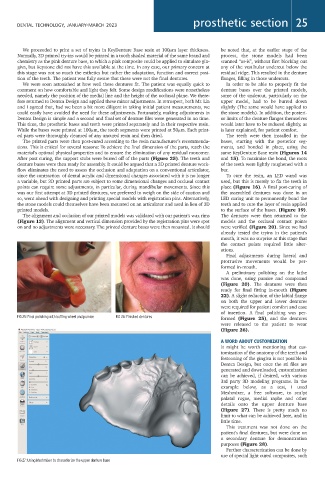
              FIG 25: Final polishing with buffing wheel and pumice  FIG 26: Finished dentures
                                                                                                   formed  (Figure  25),  and  the  dentures
                                                                                                   were  released  to  the  patient  to  wear
                                                                                                   (Figure 26).
                                                                                                   A WORD ABOUT CUSTOMIZATION
                                                                                                   It  might  be  worth  mentioning  that  cus-
                                                                                                   tomization of the anatomy of the teeth and
                                                                                                   festooning of the gingiva is not possible in
                                                                                                   Dentca  Design,  but  once  the  stl  files  are
                                                                                                   generated and downloaded, customization
                                                                                                   can  be  achieved,  if  desired,  with  various
                                                                                                   3rd  party  3D  modeling  programs.  In  the
                                                                                                   example  below,  as  a  test,  I  used
                                                                                                   Meshmixer,  a  free  software,  to  sculpt
                                                                                                   palatal  rugae,  medial  raphe  and  other
                                                                                                   details  onto  the  upper  denture  base
                                                                                                   (Figure  27).  There  is  pretty  much  no
                                                                                                   limit to what can be achieved here, and in
                                                                                                   little time.
                                                                                                      This  treatment  was  not  done  on  the
                                                                                                   patient’s final dentures, but were done on
                                                                                                   a  secondary  denture  for  demonstration
                                                                                                   purposes (Figure 28).
                                                                                                      Further characterization can be done by
                                                                                                   use of special light cured composites, such
              FIG 27: Using Meshmixer to characterize the upper denture base

