


Page 25 - Dental Practice South Asia 18-6
P. 25
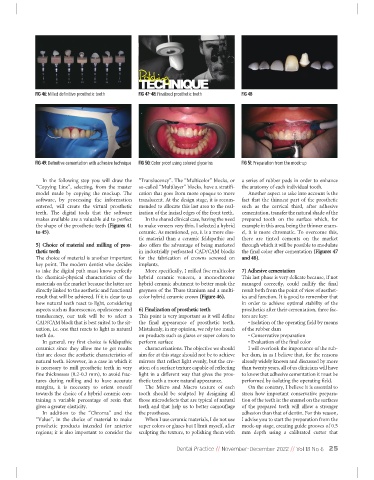
FIG 46: Milled definitive prosthetic teeth   FIG 47-48: Finalized prosthetic teeth   FIG 48


             FIG 49: Definitive cementation with adhesive technique  FIG 50: Color proof using colored glycerins  FIG 51: Preparation from the mock-up


                In  the  following  step  you  will  draw  the  "Translucency”. The “Multicolor” blocks, or  a series of rubber pads in order to enhance
              “Copying  Line”,  selecting,  from  the  master  so-called “Multilayer” blocks, have a stratifi-  the anatomy of each individual tooth.
              model  made  by  copying  the  mockup.  The  cation that goes from more opaque to more  Another aspect to take into account is the
              software,  by  processing  the  information  translucent. At the design stage, it is recom-  fact  that  the  thinnest  part  of  the  prosthetic
              entered,  will  create  the  virtual  prosthetic  mended to allocate this last area to the real-  such  as  the  cervical  third,  after  adhesive
              teeth.  The  digital  tools  that  the  software  ization of the incisal edges of the front teeth.  cementation, transfer the natural shade of the
              makes available are a valuable aid to perfect  In the shared clinical case, having the need  prepared  tooth  on  the  surface  which,  for
              the shape of the prosthetic teeth (Figures 41  to make veneers very thin, I selected a hybrid  example in this area, being the thinner enam-
              to 45).                            ceramic. As mentioned, yes, it is a more elas-  el, it is more chromatic. To overcome this,
                                                 tic  material  than  a  ceramic  feldspathic  and  there  are  tinted  cements  on  the  market
              5)  Choice  of  material  and  milling  of  pros-  also offers the advantage of being marketed  through which it will be possible to modulate
              thetic teeth                       in industrially perforated CAD/CAM blocks  the final color after cementation (Figures 47
              The choice of material is another important  for  the  fabrication  of  crowns  screwed  on  and 48).
              key point. The modern dentist who decides  implants.
              to take the digital path must know perfectly  More specifically, I milled five multicolor  7) Adhesive cementation
              the  chemical-physical  characteristics  of  the  hybrid  ceramic  veneers,  a  monochrome  This last phase is very delicate because, if not
              materials on the market because the latter are  hybrid ceramic abutment to better mask the  managed  correctly,  could  nullify  the  final
              directly linked to the aesthetic and functional  greyness of the Tbase titanium and a multi-  result both from the point of view of aesthet-
              result that will be achieved. If it is clear to us  color hybrid ceramic crown (Figure 46).  ics and function. It is good to remember that
              how natural teeth react to light, considering                          in  order  to  achieve  optimal  stability  of  the
              aspects such as fluorescence, opalescence and  6) Finalization of prosthetic teeth  prosthetics after their cementation, three fac-
              translucency,  our  task  will  be  to  select  a  This point is very important as it will define  tors are key:
              CAD/CAM block that is best suited to the sit-  the  final  appearance  of  prosthetic  teeth.  • Isolation of the operating field by means
              uation, i.e. one that reacts to light as natural  Mistakenly, in my opinion, we rely too much  of the rubber dam
              teeth do.                          on products such as glazes or super colors to  • Conservative preparation
                In  general,  my  first  choice  is  feldspathic  perform surface       • Evaluation of the final color
              ceramics  since  they  allow  me  to  get  results  characterizations. The objective we should  I will overlook the importance of the rub-
              that are closer the aesthetic characteristics of  aim for at this stage should not be to achieve  ber dam, in as I believe that, for the reasons
              natural teeth. However, in a case in which it  mirrors that reflect light evenly, but the cre-  already widely known and discussed by more
              is  necessary  to  mill  prosthetic  teeth  in  very  ation of a surface texture capable of reflecting  than twenty years, all of us clinicians will have
              fine thicknesses (0.2-0.3 mm), to avoid frac-  light in a different way that gives the pros-  to know that adhesive cementation it must be
              tures  during  milling  and  to  have  accurate  thetic teeth a more natural appearance.  performed by isolating the operating field.
              margins,  it  is  necessary  to  orient  oneself  The  Micro  and  Macro  texture  of  each  On the contrary, I believe it is essential to
              towards the choice of a hybrid ceramic con-  tooth  should  be  sculpted  by  designing  all  stress  how  important  conservative  prepara-
              taining  a  variable  percentage  of  resin  that  those microdefects that are typical of natural  tion of the teeth is: the enamel on the surfaces
              gives a greater elasticity.        teeth and that help us to better camouflage  of  the  prepared  teeth  will  allow  a  stronger
                In  addition  to  the  “Chroma”  and  the  the prostheses.           adhesion than that of dentin. For this reason,
              “Value”,  in  the  choice  of  material  to  make  When I use ceramic materials, I do not use  I advise you to start the preparation from the
              prosthetic  products  intended  for  anterior  super colors or glazes but I limit myself, after  mock-up stage, creating guide grooves of 0.5
              regions; it is also important to consider the  sculpting the texture, to polishing them with  mm  depth  using  a  calibrated  cutter  that

                                                               Dental Practice // November-December 2022 // Vol 18 No 6 25

