


Page 54 - Dental Practice South Asia 18-6
P. 54
implantology section


                  A SLOW DRILLING OSTEOTOMY PROTOCOL


                                                           DR. ALY VIRANI

               Aly Virani explores the evidence surrounding temperature changes on the bone to examine
                            why faster does not necessarily mean better in implant preparations.


              Conventional osteotomy preparation in modern implant dentistry  bone  as  this  is  the  temperature  at  which  alkaline  phosphatases
              involves  using  saline  irrigation  and  drilling  speeds  ranging  from  denature.
              800 to 1,200rpm. These high speeds reduce the friction produced  These hard tissue proteins are found in various tissues, but they
              while the irrigant limits temperature increases in the bone, allow-  are crucial for the osteogenesis process. Then, in 1982, a research
              ing quick osteotomy preparation.                     team from the University of Gothenburg led by Tomas Albrektsson
                Osseointegration rates are high, and the process is predictable,  did a study on hares using live microscopy to look at the effect of
              so why consider changing this? The evidence contains hidden clues  heat on implants placed into the hares' bones. They noticed that
              that  may  have  implications  beyond  initial  osseointegration.  above 40°C, hyperemia occurred in the tissues, and at 53°C, blood
              Perhaps conventional osteotomy preparation protocols could lead  flow  stopped  completely.  It  took  four  to  five  weeks  following
              to long-term complications around implants that are still not ade-  ischemia for the vasculature to recover. The behaviour of fat cells
              quately understood.                                  dominated their connective tissue observations.
                Slow drilling and the reduced potential for temperature increase  After being heated at 53°C for one minute, the fat cells appeared
              in the alveolus might be a solution to some late difficulties around  necrotic after two days. After three weeks, the majority of fat cells
              implants that are not yet fully understood. Regardless of the possi-  had resorbed. Functional vasculature is needed for the resorption
              bility of the impact on long-term peri-implant tissue health, slow  and replacement of new cells, suggesting that the vasculature had
              drilling could also positively impact surgical techniques and proto-  recovered at the six-to-eight-week mark when fat cells reached their
              cols for bone grafting and guided surgery.           original  numbers.  At  this  point,  bone  resorption  dominated  the
                                                                   picture and alerted the team to the possibility of bone loss related
              UNDERSTANDING TEMPERATURE                            to fat cell behaviour. It also confirmed that the safe temperature for
              To comprehend the possible benefits of slow drilling, it is necessary  bone is below 53°C.
              first to understand the history of research on temperature effects on
              bone metabolism and the scientific basis for the protocol's practical  UNDERESTIMATING DAMAGE
              consideration. At the beginning of the 1980s, research teams strug-  The  study  by  Albrektsson's  team  also  highlights  the  danger  with
              gled to devise a methodology to test temperature increase on bone  many other studies that have looked at the effect of temperature on
              health. They agreed that temperatures above 56°C would harm the  bone – they underestimate the damage caused to bone cells by tem-


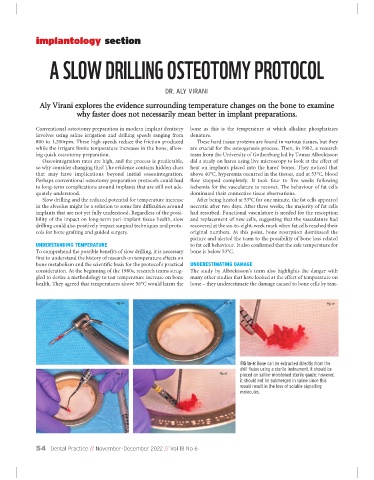
                                                                                     FIG 1a-e: Bone can be extracted directly from the
                                                                                     drill flutes using a sterile instrument. It should be
                                                                                     placed on saline-moistened sterile gauze; however,
                                                                                     it should not be submerged in saline since this
                                                                                     would result in the loss of soluble signalling
                                                                                     molecules.


              54   Dental Practice // November-December 2022 // Vol 18 No 6

