


Page 55 - Dental Practice South Asia 18-6
P. 55
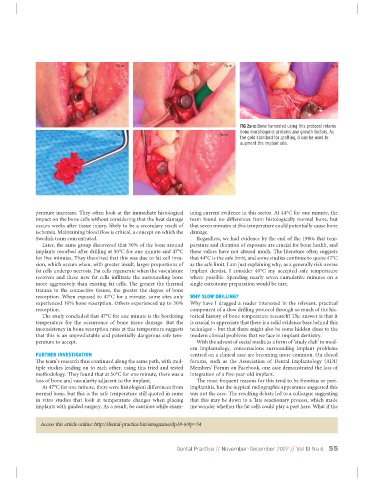
FIG 2a-e: Bone harvested using this protocol retains
                                                                                     bone morphogenic proteins and growth factors. As
                                                                                     the gold standard for grafting, it can be used to
                                                                                     augment the implant site.


             perature increases. They often look at the immediate histological  ining current evidence in this sector. At 44°C for one minute, the
             impact on the bone cells without considering that the heat damage  team  found  no  differences  from  histologically  normal  bone,  but
             occurs weeks after tissue injury, likely to be a secondary result of  that seven minutes at this temperature could potentially cause bone
             ischemia. Maintaining blood flow is critical, a concept on which the  damage.
             Swedish team concentrated.                               Regardless, we had evidence by the end of the 1980s that tem-
                Later, the same group discovered that 30% of the bone around  perature and duration of exposure are crucial for bone health, and
             implants resorbed after drilling at 50°C for one minute and 47°C  these values have not altered much. The literature often suggests
             for five minutes. They theorized that this was due to fat cell inva-  that 44°C is the safe limit, and some studies continue to quote 47°C
             sion, which occurs when, with greater insult, larger proportions of  as the safe limit. I am just explaining why, as a generally risk-averse
             fat cells undergo necrosis. Fat cells regenerate when the vasculature  implant  dentist,  I  consider  40°C  my  accepted  safe  temperature
             recovers  and  these  new  fat  cells  infiltrate  the  surrounding  bone  where  possible.  Spending  nearly  seven  cumulative  minutes  on  a
             more aggressively than existing fat cells. The greater the thermal  single osteotomy preparation would be rare.
             trauma  to  the  connective  tissues,  the  greater  the  degree  of  bone
             resorption. When exposed to 47°C for a minute, some sites only  WHY SLOW DRILLING?
             experienced 10% bone resorption. Others experienced up to 30%  Why have I dragged a reader interested in the relevant, practical
             resorption.                                           component of a slow drilling protocol through so much of the his-
                The study concluded that 47°C for one minute is the bordering  torical history of bone temperature research? The answer is that it
             temperature  for  the  occurrence  of  bone  tissue  damage.  But  the  is crucial to appreciate that there is a solid evidence base behind this
             inconsistency in bone resorption rates at this temperature suggests  technique – but that there might also be some hidden clues to the
             that this is an unpredictable and potentially dangerous safe tem-  modern clinical problems that we face in implant dentistry.
             perature to accept.                                      With the advent of social media as a form of 'study club' in mod-
                                                                   ern  implantology,  conversations  surrounding  implant  problems
             FURTHER INVESTIGATION                                 centred on a clinical case are becoming more common. On closed
             The team's research thus continued along the same path, with mul-  forums,  such  as  the  Association  of  Dental  Implantology  (ADI)
             tiple studies leading on to each other, using this tried and tested  Members' Forum on Facebook, one case demonstrated the loss of
             methodology. They found that at 50°C for one minute, there was a  integration of a five-year-old implant.
             loss of bone and vascularity adjacent to the implant.    The most frequent reasons for this tend to be fremitus or peri-
                At 47°C for one minute, there were histological differences from  implantitis, but the atypical radiographic appearance suggested this
             normal bone, but this is the safe temperature still quoted in some  was not the case. The resulting debate led to a colleague suggesting
             in  vitro  studies  that  look  at  temperature  changes  when  placing  that this may be down to a 'late reactionary process, which made
             implants with guided surgery. As a result, be cautious while exam-  me wonder whether the fat cells could play a part here. What if the


               Access this article online: http://dental-practice.biz/emagazine/dp18-6/#p=54


                                                               Dental Practice // November-December 2022 // Vol 18 No 6 55

