


Page 51 - DP.qxd
P. 51
procedures, goal and final result in a patient-
                                                                                   friendly way, but also visual ones, such as wax-ups
                                                                                   and composite mock-ups in the patient’s mouth,
                                                                                   and lately, more digital, such as various software
                                                                                   solutions that offer graphic, 3D simulations of
                                                                                   the future appearance of the patient.
                                                                                     In this sense, a special group of our patients
                                                                                   are those who have an indication for teeth
                                                                                   whitening procedures due to the unsatisfactory
                                                                                   existing shade of the tooth structure. Namely,
                                                                                   in such patients, and most often in the younger
                                                                                   population with completely healthy and intact
                                                                                   teeth, we are not able to show them the final shade
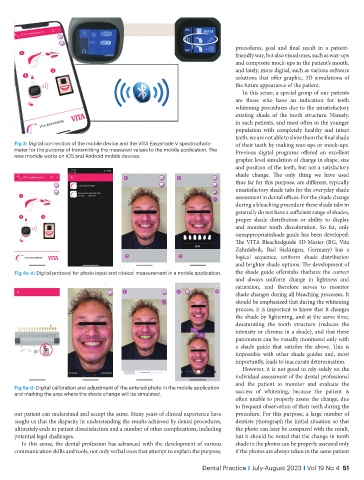
           Fig 3: Digital connection of the mobile device and the VITA Easyshade V spectrophoto-  of their teeth by making wax-ups or mock-ups.
           meter for the purpose of transmitting the measured values to the mobile application. The   Previous digital programs offered an excellent
           new module works on iOS and Android mobile devices.
                                                                                   graphic level simulation of change in shape, size
                                                                                   and position of the teeth, but not a satisfactory
                                                                                   shade change. The only thing we have used
                                                                                   thus far for this purpose, are different, typically
                                                                                   unsatisfactory shade tabs for the everyday shade
                                                                                   assessment in dental offices. For the shade change
                                                                                   during a bleaching procedure these shade tabs in
                                                                                   generally do not have a sufficient range of shades,
                                                                                   proper shade distribution or ability to display
                                                                                   and monitor tooth discoloration. So far, only
                                                                                   oneappropriateshade guide has been developed:
                                                                                   The VITA Bleachedguide 3D-Master (BG, Vita
                                                                                   Zahnfabrik, Bad Säckingen, Germany) has a
                                                                                   logical sequence, uniform shade distribution
                                                                                   and brighter shade options. The development of
           Fig 4a-d: Digital protocol for photo input and clinical measurement in a mobile application.  the shade guide offerstabs thathave the correct
                                                                                   and always uniform change in lightness and
                                                                                   saturation, and therefore serves to monitor
                                                                                   shade changes during all bleaching processes. It
                                                                                   should be emphasized that during the whitening
                                                                                   process, it is important to know that it changes
                                                                                   the shade by lightening, and at the same time,
                                                                                   desaturating the tooth structure (reduces the
                                                                                   intensity or chroma in a shade), and that these
                                                                                   parameters can be visually monitored only with
                                                                                   a shade guide that satisfies the above. This is
                                                                                   impossible with other shade guides and, most
                                                                                   importantly, leads to inaccurate determination.
                                                                                     However, it is not good to rely solely on the
                                                                                   individual assessment of the dental professional
                                                                                   and the patient to monitor and evaluate the
           Fig 5a-d: Digital calibration and adjustment of the entered photo in the mobile application
           and marking the area where the shade change will be simulated.          success of whitening, because the patient is
                                                                                   often unable to properly assess the change, due
                                                                                   to frequent observation of their teeth during the
           our patient can understand and accept the same. Many years of clinical experience have   procedure. For this purpose, a large number of
           taught us that the disparity in understanding the results achieved by dental procedures,   dentists photograph the initial situation so that
           ultimately ends in patient dissatisfaction and a number of other complications, including   the photo can later be compared with the result,
           potential legal challenges.                                             but it should be noted that the change in tooth
              In this sense, the dental profession has advanced with the development of various   shade in the photos can be properly assessed only
           communication skills and tools, not only verbal ones that attempt to explain the purpose,   if the photos are always taken in the same patient

                                                                         Dental Practice i July-August 2023 i Vol 19 No 4  51

