


Page 49 - DP20-2.qxd
P. 49
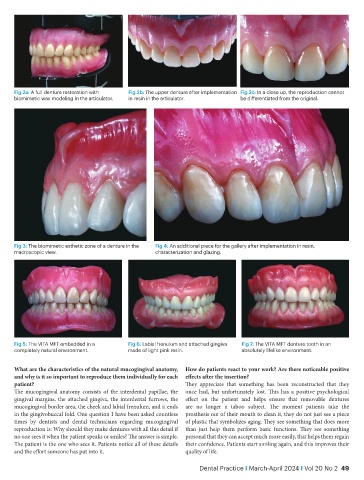
Fig 2a: A full denture restoration with  Fig 2b: The upper denture after implementation  Fig 2c: In a close up, the reproduction cannot
           biomimetic wax modeling in the articulator.  in resin in the articulator.  be differentiated from the original.


           Fig 3: The biomimetic esthetic zone of a denture in the   Fig 4: An additional piece for the gallery after implementation in resin,
           macroscopic view.                             characterization and glazing.


           Fig 5: The VITA MFT embedded in a    Fig 6: Labial frenulum and attached gingiva   Fig 7: The VITA MFT denture tooth in an
           completely natural environment.      made of light pink resin.            absolutely lifelike environment.


           What are the characteristics of the natural mucogingival anatomy,   How do patients react to your work? Are there noticeable positive
           and why is it so important to reproduce them individually for each   effects after the insertion?
           patient?                                               They appreciate that something has been reconstructed that they
           The mucogingival anatomy consists of the interdental papillae, the   once had, but unfortunately lost. This has a positive psychological
           gingival margins, the attached gingiva, the interdental furrows, the   effect on the patient and helps ensure that removable dentures
           mucogingival border area, the cheek and labial frenulum, and it ends   are no longer a taboo subject. The moment patients take the
           in the gingivobuccal fold. One question I have been asked countless   prosthesis out of their mouth to clean it, they do not just see a piece
           times by dentists and dental technicians regarding mucogingival   of plastic that symbolizes aging. They see something that does more
           reproduction is: Why should they make dentures with all this detail if   than just help them perform basic functions. They see something
           no one sees it when the patient speaks or smiles? The answer is simple.   personal that they can accept much more easily, that helps them regain
           The patient is the one who sees it. Patients notice all of these details   their confidence. Patients start smiling again, and this improves their
           and the effort someone has put into it.                quality of life.

                                                                        Dental Practice i March-April 2024 i Vol 20 No 2  49

