


Page 64 - DP Vol 22 No 1
P. 64
IMPLANTOLOGY


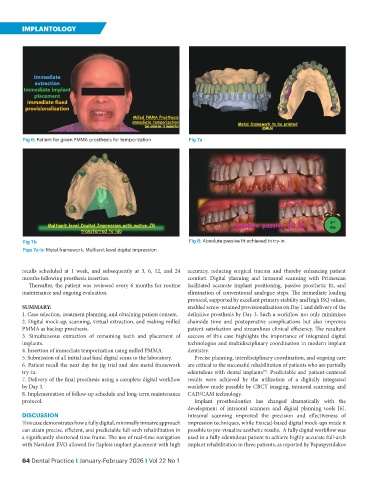
            Fig 6: Patient for given PMMA prosthesis for temporization  Fig 7a


            Fig 7b                                                 Fig 8: Absolute passive fit achieved in try-in
            Figs 7a-b: Metal framework, Multiunit level digital impression


           recalls scheduled at 1 week, and subsequently at 3, 6, 12, and 24   accuracy,  reducing  surgical  trauma  and  thereby  enhancing  patient
           months following prosthesis insertion.                 comfort. Digital planning and intraoral scanning with Primescan
              Thereafter, the patient was reviewed every 6 months for routine   facilitated accurate implant positioning, passive prosthetic fit, and
           maintenance and ongoing evaluation.                    elimination of conventional analogue steps. The immediate loading
                                                                  protocol, supported by excellent primary stability and high ISQ values,
           SUMMARY:                                               enabled screw-retained provisionalization on Day 1 and delivery of the
           1. Case selection, treatment planning, and obtaining patient consent.  definitive prosthesis by Day 3. Such a workflow not only minimizes
           2. Digital mock-up, scanning, virtual extraction, and making milled   chairside time and postoperative complications but also improves
           PMMA as backup prosthesis.                             patient satisfaction and streamlines clinical efficiency. The resultant
           3. Simultaneous extraction of remaining teeth and placement of   success of this case highlights the importance of integrated digital
           implants.                                              technologies and multidisciplinary coordination in modern implant
           4. Insertion of immediate temporization using milled PMMA.  dentistry.
           5. Submission of all initial and final digital scans to the laboratory.  Precise planning, interdisciplinary coordination, and ongoing care
           6. Patient recall the next day for jig trial and also metal framework   are critical to the successful rehabilitation of patients who are partially
           try-in.                                                edentulous with dental implants . Predictable and patient-centered
                                                                                            [5]
           7. Delivery of the final prosthesis using a complete digital workflow   results were achieved by the utilization of a digitally integrated
           by Day 3.                                              workflow made possible by CBCT imaging, intraoral scanning, and
           8. Implementation of follow-up schedule and long-term maintenance   CAD/CAM technology.
           protocol.                                                 Implant prosthodontics has changed dramatically with the
                                                                  development of intraoral scanners and digital planning tools [6].
           DISCUSSION                                             Intraoral scanning improved the precision and effectiveness of
           This case demonstrates how a fully digital, minimally invasive approach   impression techniques, while Exocad-based digital mock-ups made it
           can attain precise, efficient, and predictable full-arch rehabilitation in   possible to pre-visualize aesthetic results.  A fully digital workflow was
           a significantly shortened time frame. The use of real-time navigation   used in a fully edentulous patient to achieve highly accurate full-arch
           with Navident EVO allowed for flapless implant placement with high   implant rehabilitation in three patients, as reported by Papaspyridakos

           64 Dental Practice I January-February 2026 I Vol 22 No 1

