


Page 20 - Dental Technology 12-3
P. 20
20-22-Thomas Lee article-Q8_6-7-8-Ivoclar.qxd  10/6/2022  8:47 PM  Page 1


              20 prosthodontic section                                                         DENTAL TECHNOLOGY, JULY-SEPTEMBER 2022


              THE ABCsOF OCCLUSION AND ARTICULATIONS


                        REDUCING POSITIVE ERRORS FOR LESS ADJUSTMENTS


                                                                  THOMAS E. LEE


              This  article  will  focus  on  the  ABCs  (Axis,  Bite,  and  Chewing)  of
              Occlusion and Articulation that can be easily implemented to create
              restorations that require fewer adjustments, saving time and reduc-
              ing stress. The initial step in reducing positive errors in articulation
              begins with accurate impressions and bite records as any error in the
              technique or material will create a high restoration.All philosophies
              have the same objective of equal contacts of the occluded teeth with
              no  interferences  in  all  movements.  Laboratory  technicians  can
              achieve this objective on whatever articulator they may use, yet most
              restorations  still  need  adjustments  when  placed  in  the  patient’s
              mouth because of inaccurate impressions and/or positive errors in
              the Axis, Bite and Chewing.
                An  articulator  is  an  instrument  that  represents  the  temporo-
              mandibular joints (Axis) or jaws to which study casts may be attached
              to  simulate  the  static  (Bite)  and  dynamic  (Chewing)  relationship
              between the occlusal surfaces of the teeth during mandibular move-
              ments. Positive errors occur when the articulator under compensates  FIG 1
              for  mandibular  movements,  resulting  in  a  positive  feature  on  the
              occlusal  surface  where  that  feature  should  be  smaller  or  non  exis-
              tent.11 Positive Errors can create interferences that may need to be
              adjusted in the Axis (opening and closing movements), the Bite and
              Chewing (envelope of function movements) depending on the disclud-
              ing factor of the protrusive pathway, influence of Bennett movement,
              and steepness of the anterior guidance. Negative Errors occur when
              the articulator overcompensates for mandibular movements, resulting
              in a negative feature on the occlusal surface which allows the teeth to
              disclude more freely. 11


              AXIS
              It is important to relate the teeth to the patient’s axis to simulate
              more accurate axis movements in an articulator. The most common  FIG 2                       FIG 3
              error  in  relating  study  models  is  using  a  simple  hinge  articulator
              without the use of a facebow. The axis in simple hinge articulators
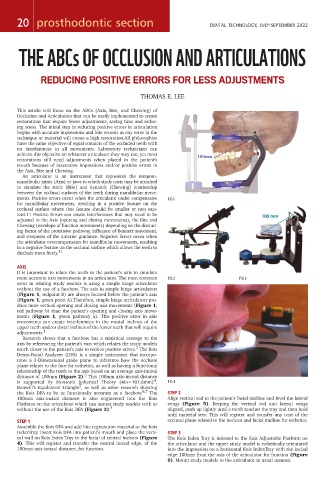
              (Figure 1, redpoint B) are always located below the patient’s axis
              (Figure 1, green point A).Therefore, simple hinge articulators pro-
              duce more vertical opening and closing axis movements (Figure 1,
              red pathway b) than the patient’s opening and closing axis move-
              ments  (Figure  1,  green  pathway  a).  This  positive  error  in  axis
              movements  can  create  interferences  in  the  mesial  inclines  of  the
              upper teeth and/or distal inclines of the lower teeth that will require
              adjustments. 1
                Research shows that a facebow has a statistical average to the
              axis by referencing the patient’s ears which relates the study models
                                                                2
              much closer to the patient’s axis to reduce positive errors. The Kois
              Dento-Facial  Analyzer  (DFA)  is  a  simple  instrument  that  incorpo-
              rates  a  3-Dimensional  guide  plane  to  reference  how  the  occlusal
              plane relates to the face for esthetics, as well as having a functional
              relationship of the teeth to the axis based on an average axis-incisal
                                          3
              distance of 100mm (Figure 2). This 100mm axis-incisal distance
                                                                       4
              is  supported  by  Monson’s  Spherical  Theory  (4in=101.6mm) ,  FIG 4
                                        5
              Bonwill’s Equilateral Triangle , as well as other research showing
              the  Kois  DFA  to  be  as  functionally  accurate  as  a  facebow. 6,7   The  STEP 2
              100mm  axis-incisal  distance  is  also  engineered  into  the  Kois  Align vertical rod to the patient’s facial midline and level the lateral
              Platform on the articulator which can mount study models with or  wings  (Figure  5).  Keeping  the  vertical  rod  and  lateral  wings
              without the use of the Kois DFA (Figure 3). 3                  aligned, push up lightly until a tooth touches the tray and then hold
                                                                             until  material  sets.  This  will  register  and  transfer  any  cant  of  the
              STEP 1                                                         occlusal plane related to the horizon and facial midline for esthetics.
              Assemble the Kois DFA and add bite registration material to the Kois
              IndexTray. Insert Kois DFA into patient’s mouth and place the verti-  STEP 3
              cal wall on Kois Index Tray to the facial of central incisors (Figure  The Kois Index Tray is indexed to the Kois Adjustable Platform on
              4). This will register and transfer the central incisal edge, of the  the articulator and the upper study model is esthetically orientated
              100mm axis-incisal distance, for function.                     into the impression on a horizontal Kois IndexTray with the incisal
                                                                             edge 100mm from the axis of the articulator for function (Figure
                                                                             6). Mount study models to the articulator in usual manner.

