


Page 11 - DT 15-1
P. 11
10-21-Claudio_6-7-8-Ivoclar.qxd  01-05-2025  07:55  Page 2


              DENTAL TECHNOLOGY, JANUARY-MARCH 2025
                                                                                         prosthetic section  11


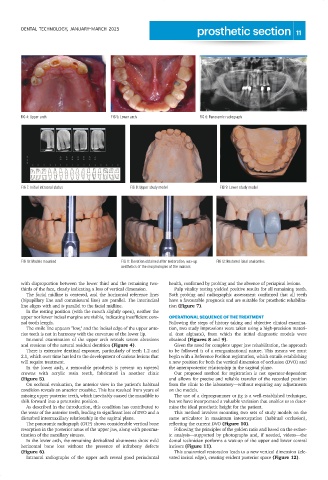
              FIG 4: Upper arch                     FIG 5: Lower arch                     FIG 6: Panoramic radiograph


              FIG 7: Initial intraoral status               FIG 8: Upper study model               FIG 9: Lower study model


              FIG 10: Models mounted                     FIG 11: Elevation obtained after restoration, wax-up   FIG 12: Restored ideal anatomies
                                                         aesthetics of the morphologies of the incisors


              with disproportion between the lower third and the remaining two-  health, confirmed by probing and the absence of periapical lesions.
              thirds of the face, clearly indicating a loss of vertical dimension.  Pulp vitality testing yielded positive results for all remaining teeth.
                The facial midline is centered, and the horizontal reference lines  Both  probing  and  radiographic  assessment  confirmed  that  all  teeth
              (bipupillary line and commissural line) are parallel. The interincisal  have a favourable prognosis and are suitable for prosthetic rehabilita-
              line aligns with and is parallel to the facial midline.        tion (Figure 7).
                In the resting position (with the mouth slightly open), neither the
              upper nor lower incisal margins are visible, indicating insufficient coro-  OPERATIONAL SEQUENCE OF THE TREATMENT
              nal tooth length.                                              Following the steps of history taking and objective clinical examina-
                The smile line appears "low," and the incisal edge of the upper ante-  tion, two study impressions were taken using a high-precision materi-
              rior teeth is not in harmony with the curvature of the lower lip.  al  (not  alginate),  from  which  the  initial  diagnostic  models  were
                Intraoral  examination  of  the  upper  arch  reveals  severe  abrasions  obtained (Figures 8 and 9).
              and erosions of the natural residual dentition (Figure 4).       Given the need for complete upper jaw rehabilitation, the approach
                There is extensive dentinal exposure, particularly of teeth 1.2 and  to be followed is of a reorganizational nature. This means we must
              2.1, which over time has led to the development of carious lesions that  begin with a Reference Position registration, which entails establishing
              will require treatment.                                        a new position for both the vertical dimension of occlusion (DVO) and
                In  the  lower  arch,  a  removable  prosthesis  is  present  on  tapered  the anteroposterior relationship in the sagittal plane.
              crowns  with  acrylic  resin  teeth,  fabricated  in  another  clinic   Our  proposed  method  for  registration  is  not  operator-dependent
              (Figure 5).                                                    and allows for precise and reliable transfer of the recorded position
                On occlusal evaluation, the anterior view in the patient’s habitual  from the clinic to the laboratory—without requiring any adjustments
              condition reveals an anterior crossbite. This has resulted from years of  on the models.
              missing upper posterior teeth, which inevitably caused the mandible to  The use of a deprogrammer or jig is a well-established technique,
              shift forward into a protrusive position.                      but we have incorporated a valuable variation that enables us to deter-
                As described in the introduction, this condition has contributed to  mine the ideal prosthetic height for the patient.
              the wear of the anterior teeth, leading to significant loss of DVO and a  This method involves mounting two sets of study models on the
              disturbed intermaxillary relationship in the sagittal plane.   same  articulator  in  maximum  intercuspation  (habitual  occlusion),
                The panoramic radiograph (OTP) shows considerable vertical bone  reflecting the current DVO (Figure 10).
              resorption in the posterior areas of the upper jaw, along with pneuma-  Following the principles of the golden ratio and based on the esthet-
              tization of the maxillary sinuses.                             ic  analysis—supported  by  photographs  and,  if  needed,  videos—the
                In the lower arch, the remaining devitalized abutments show mild  dental technician performs a wax-up of the upper and lower central
              horizontal  bone  loss  without  the  presence  of  infrabony  defects  incisors (Figure 11).
              (Figure 6).                                                      This anatomical restoration leads to a new vertical dimension (ele-
                Intraoral  radiographs  of  the  upper  arch  reveal  good  periodontal  vated incisal edge), creating evident posterior space (Figure 12).

