


Page 13 - DT 15-1
P. 13
10-21-Claudio_6-7-8-Ivoclar.qxd  01-05-2025  07:55  Page 4


              DENTAL TECHNOLOGY, JANUARY-MARCH 2025
                                                                                        prosthetic section  13


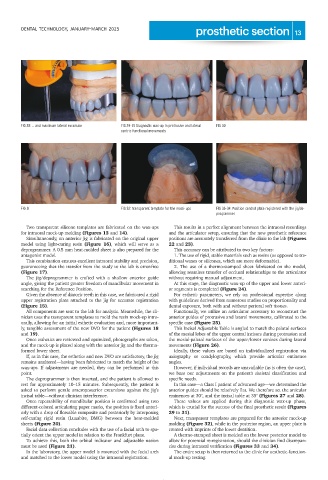
              FIG 28: ... and maximum lateral excursion  FIG 29-31: Diagnostic wax-up in protrusive and lateral   FIG 30
                                                        centric functional movements


              FIG 31                                    FIG 32: Transparent template for the mock-ups  FIG 33-34: Position control plate registered with the jig/de-
                                                                                                 programmer

                Two transparent silicone templates are fabricated on the wax-ups  This results in a perfect alignment between the intraoral recordings
              for intraoral mock-up molding (Figures 13 and 14).             and the articulator setup, ensuring that the new prosthetic reference
                Simultaneously, an anterior jig is fabricated on the original upper  positions are accurately transferred from the clinic to the lab (Figures
              model  using  light-curing  resin  (Figure  16),  which  will  serve  as  a  22 and 23).
              deprogrammer. A 0.5 mm heat-molded sheet is also prepared for the  This accuracy can be attributed to two key factors:
              antagonist model.                                                1. The use of rigid, stable materials such as resins (as opposed to tra-
                This combination ensures excellent intraoral stability and precision,  ditional waxes or silicones, which are more deformable).
              guaranteeing that the transfer from the study to the lab is error-free  2.  The  use  of  a  thermo-stamped  sheet  fabricated  on  the  model,
              (Figure 17).                                                   allowing seamless transfer of occlusal relationships to the articulator
                The  jig/deprogrammer  is  crafted  with  a  shallow  anterior  guide  without requiring manual adjustment.
              angle, giving the patient greater freedom of mandibular movement in  At this stage, the diagnostic wax-up of the upper and lower anteri-
              searching for the Reference Position.                          or segments is completed (Figure 24).
                Given the absence of diatoric teeth in this case, we fabricated a rigid  For  esthetic  parameters,  we  rely  on  professional  expertise  along
              upper registration plate attached to the jig for accurate registration  with guidelines derived from numerous studies on proportionality and
              (Figure 15).                                                   dental exposure, both with and without perioral soft tissues.
                All components are sent to the lab for analysis. Meanwhile, the cli-  Functionally, we utilize an articulator accessory to reconstruct the
              nician uses the transparent templates to mold the resin mock-up intra-  anterior guides of protrusive and lateral movements, calibrated to the
              orally, allowing for an initial esthetic evaluation and, more important-  specific case (Figure 25).
              ly, tangible assessment of the new DVO for the patient (Figures 18  This Incisal Adjustable Table is angled to match the palatal surfaces
              and 19).                                                       of the mesial lobes of the upper central incisors during protrusion and
                Once esthetics are reviewed and optimized, photographs are taken,  the mesial-palatal surfaces of the upper/lower canines during lateral
              and the mock-up is placed along with the anterior jig and the thermo-  movements (Figure 26).
              formed lower sheet.                                              Ideally,  these  values  are  based  on  individualized  registration  via
                If, as in this case, the esthetics and new DVO are satisfactory, the jig  axiography  or  condylography,  which  provide  articular  eminence
              remains unaltered—having been fabricated to match the height of the  angles.
              wax-ups.  If  adjustments  are  needed,  they  can  be  performed  at  this  However, if individual records are unavailable (as is often the case),
              point.                                                         we base our adjustments on the patient's skeletal classification and
                The deprogrammer is then inserted, and the patient is allowed to  specific needs.
              rest  for  approximately  10–15  minutes.  Subsequently,  the  patient  is  In this case—a Class I patient of advanced age—we determined the
              asked  to  perform  gentle  anteroposterior  excursions  against  the  jig’s  anterior guides should be relatively flat. We therefore set the articular
              incisal table—without clinician interference.                  eminences at 30°, and the incisal table at 35° (Figures 27 and 28).
                Once repeatability of mandibular position is confirmed using two  These  values  are  applied  during  this  diagnostic  wax-up  phase,
              different-colored articulating paper marks, the position is fixed anteri-  which is crucial for the success of the final prosthetic result (Figures
              orly with a drop of flowable composite and posteriorly by interposing  29 to 31).
              self-curing  rigid  resin  (Luxabite,  DMG)  between  the  heat-molded  Next, transparent templates are prepared for the anterior mock-up
              sheets (Figure 20).                                            molding (Figure 32), while in the posterior region, an upper plate is
                Facial data collection concludes with the use of a facial arch to spa-  created with imprints of the lower dentition.
              tially orient the upper model in relation to the Frankfurt plane.  A thermo-stamped sheet is molded on the lower posterior model to
                To  achieve  this,  both  the  orbital  indicator  and  adjustable  nasion  allow for potential re-registration, should the clinician find discrepan-
              must be used (Figure 21).                                      cies during intraoral verification (Figures 33 and 34).
                In the laboratory, the upper model is mounted with the facial arch  The entire setup is then returned to the clinic for aesthetic-function-
              and matched to the lower model using the intraoral registration.  al mock-up testing.

