


Page 11 - DT Vol 15 No 3
P. 11
implantology I
             DENTAL TECHNOLOGY, JULY-SEPTEMBER 2025                                                                               11


             STEP 4: SURGICAL PHASE
             The surgical guide was seated in position using anchor pins. The guide was
             tooth- and tissue-supported (Figures 13a,13b and 13c). This ensured that
             the surgical guide obtained stability both from the mucosa and teeth. The
             implants were placed first and then the extractions of the remaining teeth
             were carried out. Multi-units (implants) were placed in position according to
             the gingival height thickness, which was already determined in the planning
             software (Figures 14 and 15).

             STEP 5: TEMPORIZATION STAGE
             A postoperative CBCT was taken to confirm the planned and executed
             implant positions. Pickup of the temporary prosthesis was done intraorally.
             The intaglio surface of the prosthesis was finished and the PMMA was
             screwed over the multi-units. Shim stock drag, protrusive and laterotrusive
             movements were checked for. Occlusal prematurities were corrected to
             achieve simultaneous bilateral contacts, or the so-called implant-protected   Fig 4: Full mouth x-ray of the patient
             occlusion (Figure 16).


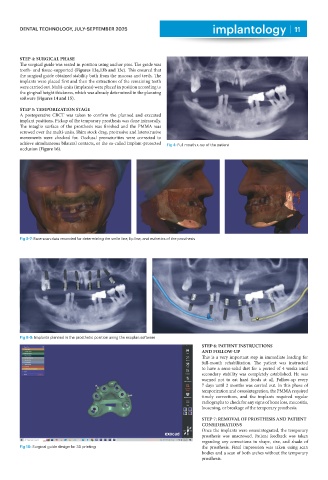
             Fig 5-7: Face scan data recorded for determining the smile line, lip line, and esthetics of the prosthesis


             Fig 8-9: Implants planned in the prosthetic position using the exoplan software
                                                                                          STEP 6: PATIENT INSTRUCTIONS
                                                                                          AND FOLLOW-UP
                                                                                          This is a very important step in immediate loading for
                                                                                          full-mouth rehabilitation. The patient was instructed
                                                                                          to have a semi-solid diet for a period of 4 weeks until
                                                                                          secondary stability was completely established. He was
                                                                                          warned not to eat hard foods at all. Follow-up every
                                                                                          7 days until 2 months was carried out. In this phase of
                                                                                          temporization and osseointegration, the PMMA required
                                                                                          timely corrections, and the implants required regular
                                                                                          radiographs to check for any signs of bone loss, mucositis,
                                                                                          loosening, or breakage of the temporary prosthesis.

                                                                                          STEP 7: REMOVAL OF PROSTHESIS AND PATIENT
                                                                                          CONSIDERATIONS
                                                                                          Once the implants were osseointegrated, the temporary
                                                                                          prosthesis  was unscrewed. Patient feedback  was taken
                                                                                          regarding  any corrections  in  shape, size, and  shade of
             Fig 10: Surgical guide design for 3D printing                                the  prosthesis.  Final  impression  was  taken  using  scan
                                                                                          bodies and a scan of both arches without the temporary
                                                                                          prosthesis.

