


Page 41 - DP Vol 20 No 4 HR
P. 41
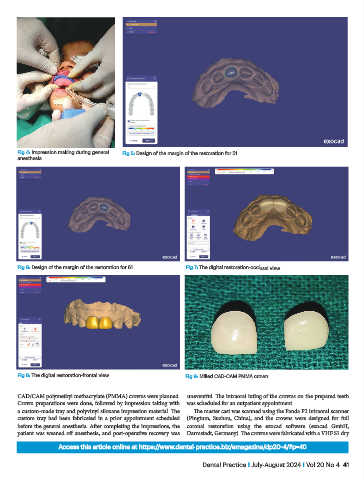
Fig 4: Impression making during general   Fig 5: Design of the margin of the restoration for 51
           anesthesia


           Fig 6: Design of the margin of the restoration for 61  Fig 7: The digital restoration-occlusal view


           Fig 8: The digital restoration-frontal view            Fig 9: Milled CAD-CAM PMMA crown


           CAD/CAM polymethyl methacrylate (PMMA) crowns were planned.   uneventful. The intraoral luting of the crowns on the prepared teeth
           Crown preparations were done, followed by impression taking with   was scheduled for an outpatient appointment.
           a custom-made tray and polyvinyl siloxane impression material. The   The master cast was scanned using the Panda P2 intraoral scanner
           custom tray had been fabricated in a prior appointment scheduled   (Pingtum, Suzhou, China),  and the crowns  were designed for full
           before the general anesthesia. After completing the impressions, the   coronal restoration using the exocad software (exocad GmbH,
           patient was weaned off anesthesia, and post-operative recovery was   Darmstadt, Germany). The crowns were fabricated with a VHF S1 dry

                         Access this article online at https://www.dental-practice.biz/emagazine/dp20-4/#p=40

                                                                       Dental Practice I July-August 2024 I Vol 20 No 4  41

