


Page 15 - DT14-1
P. 15
14-20-Mohit-Q8_6-7-8-Ivoclar.qxd  4/15/2024  8:01 PM  Page 2


              DENTAL TECHNOLOGY, JANUARY-MARCH 2024
                                                                                        prosthetic section  15


                                                                             MART) (Figures 10 to 14). The mock-up allowed for patient feedback
                                                                             and consent regarding the anticipated changes in tooth morphology, func-
                                                                             tional occlusion, and aesthetics. Following patient counselling and agree-
                                                                             ment,  the  treatment  proceeded  with  a  focus  on  minimally  invasive
                                                                             occlusal overlays and veneers wherever possible.
                                                                             PREPARATION
                                                                             Initially, at the first visit for teeth preparation, both the upper and lower
                                                                             teeth from 1st premolar to 1st premolar were temporized over non-pre-
                                                                             pared teeth. This was done so as to create the designed vertical stop of the
                                                                             newly created occlusal scheme.
                                                                               Later, the upper and lower posterior teeth from 2nd premolar to 2nd
                                                                             molar were prepared with the decided design for veneerlays and overlays
                                                                             (Figures 15 to 18). These designs were specifically chosen for a mini-
                                                                             mally  invasive,  non-retentive  occlusal  coverage  where  all  the  margins
                                                                             were supragingival.
                                                                               The supragingival margin was chosen for two reasons:
                                                                               1. To facilitate easier isolation and bonding by preventing crevicular
                                                                             fluid seepage and inflammation during the temporization phase.
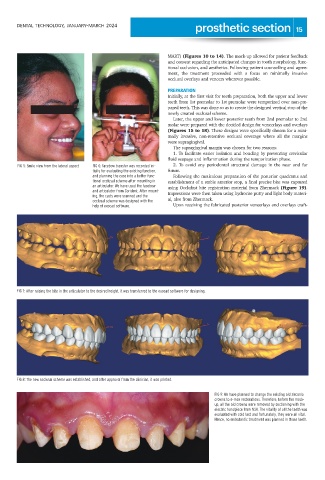
              FIG 5: Smile view from the lateral aspect  FIG 6: Facebow transfer was recorded ini-  2.  To  avoid  any  periodontal  structural  damage  in  the  near  and  far
                                             tially for evaluating the existing function,  future.
                                             and planning the case into a better func-  Following the meticulous preparation of the posterior quadrants and
                                             tional occlusal scheme after mounting in  establishment of a stable anterior stop, a final precise bite was captured
                                             an articulator. We have used the facebow  using Occlufast bite registration material from Zhermack (Figure 19).
                                             and articulator from Corident. After mount-
                                             ing, the casts were scanned and the  Impressions were then taken using hydrorise putty and light body materi-
                                             occlusal scheme was designed with the  al, also from Zhermack.
                                             help of exocad software.          Upon receiving the fabricated posterior veneerlays and overlays craft-


              FIG 7: After raising the bite in the articulator to the desired height, it was transferred to the exocad software for designing.


              FIG 8: The new occlusal scheme was established, and after approval from the clinician, it was printed.


                                                                                                 FIG 9: We have planned to change the existing old zirconia
                                                                                                 crowns to e-max restorations. Therefore, before the mock-
                                                                                                 up, all the old crowns were removed by sectioning with the
                                                                                                 electric handpiece from NSK. The vitality of all the teeth was
                                                                                                 evaluated with cold test and fortunately, they were all vital.
                                                                                                 Hence, no endodontic treatment was planned in those teeth.

