


Page 26 - DT Vol 15 No 3
P. 26
26   I aesthetics                                                          DENTAL TECHNOLOGY, JULY-SEPTEMBER 2025


             REQUIREMENTS FOR ZIRCONIUM OXIDE MULTILAYER                    CASE II: A CLASSIC FOR MICROSTRATIFICATION
             The choice of a particular zirconium oxide therefore requires a thorough
             evaluation. Zirconium oxide must meet certain criteria as a base material,
             including:
             • Excellent balance between opacity and translucency (colour harmony)
             • Reliable processing properties (milling and sintering)
             • Consistently good results (reproducibility)
             • Stable material properties (durability)
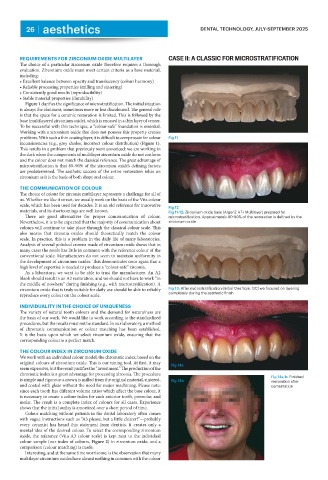
               Figure 1 clarifies the significance of microstratification. The initial situation
             is always the abutment, sometimes more or less discoloured. The general rule
             is that the space for a ceramic restoration is limited. This is followed by the
             base (multilayered zirconium oxide), which is encased in a thin layer of veneer.
             To be successful with this technique, a “colour-safe” foundation is essential.
             Working with a zirconium oxide that does not possess this property creates
             problems. With such a thin coating layer, it is difficult to compensate for colour   Fig 11
             inconsistencies (e.g., grey shades, incorrect colour distribution) (Figure 1).
             This results in a problem that previously went unnoticed: we are working in
             the dark when the components of multilayer zirconium oxide do not conform
             and the colour does not match the classical reference. The great advantage of
             microstratification is that 80–90% of the zirconium oxide’s defining factors
             are predetermined. The aesthetic success of the entire restoration relies on
             zirconium as it is the basis of both shape and colour.

             THE COMMUNICATION OF COLOUR
             The choice of colour for zirconia multilayer represents a challenge for all of
             us. Whether we like it or not, we usually work on the basis of the Vita colour
             scale, which has been used for decades. It is an old reference for innovative   Fig 12
             materials, and its shortcomings are well known.                Fig 11-12: Zirconium oxide base (ArgenZ HT+ Multilayer) prepared for
               There  are  good  alternatives  for  proper  communication  of  colour.   microstratification. Approximately 80-90% of the restoration is defined by the
             Nevertheless, it is to be expected that the majority of communication about   zirconium oxide
             colours will continue to take place through the classical colour scale. This
             also means that zirconia oxides should theoretically match the colour
             scale. In practice, this is a problem in the daily life of many laboratories.
             Analysis of several polished crowns made of zirconium oxide shows that in
             many cases the result has little in common with the reference colour of the
             conventional scale. Manufacturers do not seem to maintain uniformity in
             the development of zirconium oxides. This demonstrates once again that a
             high level of expertise is needed to produce a “colour-safe” zirconia.
               As a laboratory, we want to be able to trust the manufacturer. An A2
             blank should result in an A2 restoration, and we should not have to work “in
             the middle of nowhere” during finishing (e.g., with microstratification). A
             zirconium oxide that is truly suitable for daily use should be able to reliably   Fig 13: After microstratification (Initial One Sqin, GC) we focused on layering
             reproduce every colour on the colour scale.                    completely during the aesthetic finish
             INDIVIDUALITY IN THE CHOICE OF UNIQUENESS
             The variety of natural tooth colours and the demand for naturalness are
             the basis of our work. We would like to work according to the standardized
             procedures, but the results must not be standard. In our laboratory, a method
             of chromatic communication or colour matching has been established.
             It  is  the  basis  upon  which  we  select  zirconium  oxide,  ensuring  that  the
             corresponding colour is a perfect match.
             THE COLOUR INDEX IN ZIRCONIUM OXIDE
             We work with an individual colour model, the chromatic index, based on the
             original colours of zirconium oxide. This is our tuning tool. At first, it may   Fig 14a
             seem expensive, but the result justifies the “investment.” The production of the
             chromatic index is a great advantage for processing zirconia. The procedure                                Fig 14a-b: Finished
             is simple and rigorous: a crown is milled from the original material, sintered,   Fig 14b                  restoration after
             and coated with glaze without the need for major machining. Please note:                                   cementation
             since each tooth has different volume ratios which affect the base colour, it
             is necessary to create a colour index for each anterior tooth, premolar, and
             molar. The result is a complete index of colours for all cases. Experience
             shows that the initial outlay is amortized over a short period of time.
               Colour matching without patients in the dental laboratory often comes
             with vague instructions such as “A3 please, but a little clearer!”—probably
             every ceramist has heard this statement from dentists. It creates only a
             mental idea of the desired colour. To select the corresponding zirconium
             oxide, the reference (Vita A3 colour scale) is kept next to the individual
             colour sample (our index of colours, Figure 2) in zirconium oxide, and a
             comparison (colour matching) is made.
               Interesting, and at the same time worrisome, is the observation that many
             multilayer zirconium oxides have almost nothing in common with the colour

