


Page 25 - DT Vol 15 No 3
P. 25
aesthetics I
             DENTAL TECHNOLOGY, JULY-SEPTEMBER 2025                                                                              25


            CASE I: SIX ANTERIOR TEETH ON NEARLY UNIFORM STUMPS WITH PLENTY OF SPACE AVAILABLE


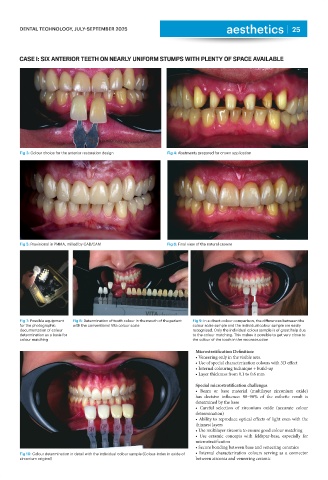
             Fig 3: Colour choice for the anterior restoration design      Fig 4: Abutments prepared for crown application


             Fig 5: Provisional in PMMA, milled by CAD/CAM                 Fig 6: Final view of the natural crowns


             Fig 7: Possible equipment   Fig 8: Determination of tooth colour in the mouth of the patient   Fig 9: In a direct colour comparison, the differences between the
             for the photographic   with the conventional Vita colour scale           colour scale sample and the individual colour sample are easily
             documentation of colour                                                  recognized. Only the individual colour sample is of great help due
             determination as a basis for                                             to the colour matching. This makes it possible to get very close to
             colour matching                                                          the colour of the tooth in the reconstruction

                                                                                        Microstratification Definition:
                                                                                        • Veneering only in the visible area
                                                                                        • Use of special characterization colours with 3D effect
                                                                                        • Internal colouring technique + build-up
                                                                                        • Layer thickness from 0.1 to 0.6 mm

                                                                                        Special microstratification challenges
                                                                                        • Beam or base material (multilayer zirconium oxide)
                                                                                        has decisive influence: 80–90% of the esthetic result is
                                                                                        determined by the base
                                                                                        • Careful selection of zirconium oxide  (accurate colour
                                                                                        determination)
                                                                                        • Ability to reproduce optical effects of light even with the
                                                                                        thinnest layers
                                                                                        • Use multilayer zirconia to ensure good colour matching
                                                                                        • Use ceramic concepts with feldspar-base, especially for
                                                                                        microstratification
                                                                                        • Secure bonding between base and veneering ceramics
             Fig 10: Colour determination in detail with the individual colour sample (Colour-Index in oxide of   • Internal characterization colours serving as a connector
             zirconium original)                                                        between zirconia and veneering ceramic

