


Page 56 - DP Vol 20 No 4 HR
P. 56
ORTHODONTIC SECTION


                                                                                 Biomechanics
                                                                                 In the Brava appliance system, force optimization
                                                                                 is achieved through finite element analysis. This
                                                                                 method ensures that the Independent Movers™
                                                                                 anchorage bar exerts force closer to the center of
                                                                                 resistance, as opposed to the labial straight wire.
                                                                                 The design of the Independent Movers™ helps
                                                                                 to prevent round tipping by evenly distributing
                                                                                 and balancing the force across the anchorage bar.
                                                                                 Unlike  conventional  methods,  where  spacing  is
                                                                                 typically managed after the leveling and alignment
                                                                                 and torque adjustments are made after placing a
                                                                                 large rectangular archwire in the bracket slot, the
                                                                                 Brava appliance addresses both spacing and torque
                                                                                 from the very start of the treatment .
                                                                                                           10
                                                                                   Once the Brava appliance is engaged with the
                                                                                 brackets, it precisely delivers the necessary forces to
                                                                                 move each tooth through all three planes of space—
                                                                                 transverse, sagittal, and antero-posterior. These
                                                                                 movements guide the teeth from their initial pre-
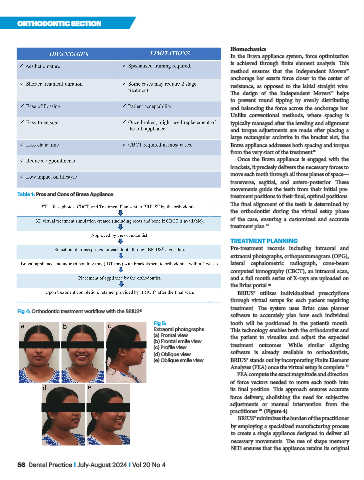
           Table 1: Pros and Cons of Brava Appliance
                                                                                 treatment positions to their final, optimal positions.
                                                                                 The final alignment of the teeth is determined by
                                                                                 the orthodontist during the virtual setup phase
                                                                                 of  the  case,  ensuring  a  customized  and  accurate
                                                                                 treatment plan. 14

                                                                                 TREATMENT PLANNING
                                                                                 Pre-treatment records including intraoral and
                                                                                 extraoral photographs, orthopantomogram (OPG),
                                                                                 lateral cephalometric radiograph, cone-beam
                                                                                 computed tomography (CBCT), an intraoral scan,
                                                                                 and a full mouth series of X-rays are uploaded on
                                                                                 the Brius portal. 10
                                                                                   BRIUS® utilizes individualized prescriptions
                                                                                 through virtual setups for each patient requiring
                                                                                 treatment. The system uses Brius case planner
           Fig 4: Orthodontic treatment workflow with the BRIUS®
                                                                                 software  to accurately  plan how  each individual
                                                        Fig 5:                   tooth will be positioned in the patient’s mouth.
                                                        Extraoral photographs    This technology enables both the orthodontist and
                                                        (a) Frontal view         the patient to visualize and adjust the expected
                                                        (b) Frontal smile view
                                                        (c) Profile view         treatment outcomes. While similar aligning
                                                        (d) Oblique view         software is already available to orthodontists,
                                                        (e) Oblique smile view   BRIUS® stands out by incorporating Finite Element
                                                                                 Analyses (FEA) once the virtual setup is complete.
                                                                                                                      13
                                                                                   FEA compute the exact magnitude and direction
                                                                                 of force vectors needed to move each tooth into
                                                                                 its final position. This approach ensures accurate
                                                                                 force delivery, abolishing the need for subjective
                                                                                 adjustments or manual intervention from the
                                                                                 practitioner.  (Figure 4)
                                                                                          10
                                                                                   BRIUS® minimizes the burden of the practitioner
                                                                                 by employing a specialized manufacturing process
                                                                                 to create a single appliance designed to deliver all
                                                                                 necessary  movements. The  use of  shape memory
                                                                                 NiTi ensures that the appliance retains its original

           56  Dental Practice I July-August 2024 I Vol 20 No 4

