


Page 55 - DP Vol 20 No 4 HR
P. 55
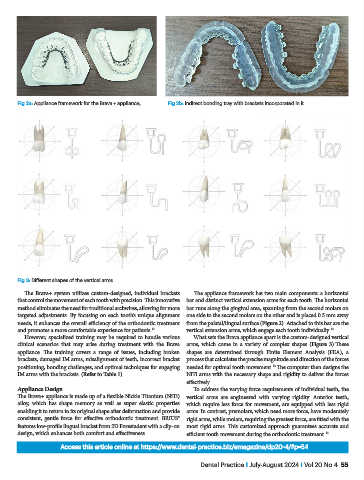
Fig 2a: Appliance framework for the Brava + appliance,   Fig 2b: Indirect bonding tray with brackets incorporated in it


           Fig 3: Different shapes of the vertical arms

              The Brava+ system utilizes custom-designed, individual brackets   The appliance framework has two main components: a horizontal
           that control the movement of each tooth with precision. This innovative   bar and distinct vertical extension arms for each tooth. The horizontal
           method eliminates the need for traditional archwires, allowing for more   bar runs along the gingival area, spanning from the second molars on
           targeted adjustments. By focusing on each tooth’s unique alignment   one side to the second molars on the other and is placed 0.5 mm away
           needs, it enhances the overall efficiency of the orthodontic treatment   from the palatal/lingual surface (Figure 2). Attached to this bar are the
           and promotes a more comfortable experience for patients. 13  vertical extension arms, which engage each tooth individually. 13
              However, specialized training may be required to handle various   What sets the Brava appliance apart is the custom-designed vertical
           clinical scenarios that may arise during treatment with the Brava   arms, which come in a variety of complex shapes  (Figure 3).These
           appliance. The training covers a range of issues, including broken   shapes are determined through Finite Element Analysis (FEA), a
           brackets, damaged IM arms, misalignment of teeth, incorrect bracket   process that calculates the precise magnitude and direction of the forces
           positioning, bonding challenges, and optimal techniques for engaging   needed for optimal tooth movement.  The computer then designs the
                                                                                              13
           IM arms with the brackets. (Refer to Table 1)          NiTi arms with the necessary shape and rigidity to deliver the forces
                                                                  effectively.
           Appliance Design                                          To address the varying force requirements of individual teeth, the
           The Brava+ appliance is made up of a flexible Nickle Titanium (NiTi)   vertical arms are engineered with varying rigidity. Anterior teeth,
           alloy, which has shape memory as well as super elastic properties   which require less force for movement, are equipped with less rigid
           enabling it to return to its original shape after deformation and provide   arms. In contrast, premolars, which need more force, have moderately
           consistent, gentle force for effective orthodontic treatment. BRIUS®   rigid arms, while molars, requiring the greatest force, are fitted with the
           features low-profile lingual bracket from 2D Forestadent with a clip-on   most rigid arms. This customized approach guarantees accurate and
           design, which enhances both comfort and effectiveness.  efficient tooth movement during the orthodontic treatment. 13

                         Access this article online at https://www.dental-practice.biz/emagazine/dp20-4/#p=54

                                                                       Dental Practice I July-August 2024 I Vol 20 No 4  55

